
HEALTH JOURNAL
PCOS: Cycles, Metabolic Health and a Coordinated Plan
Ben Wong · · Updated
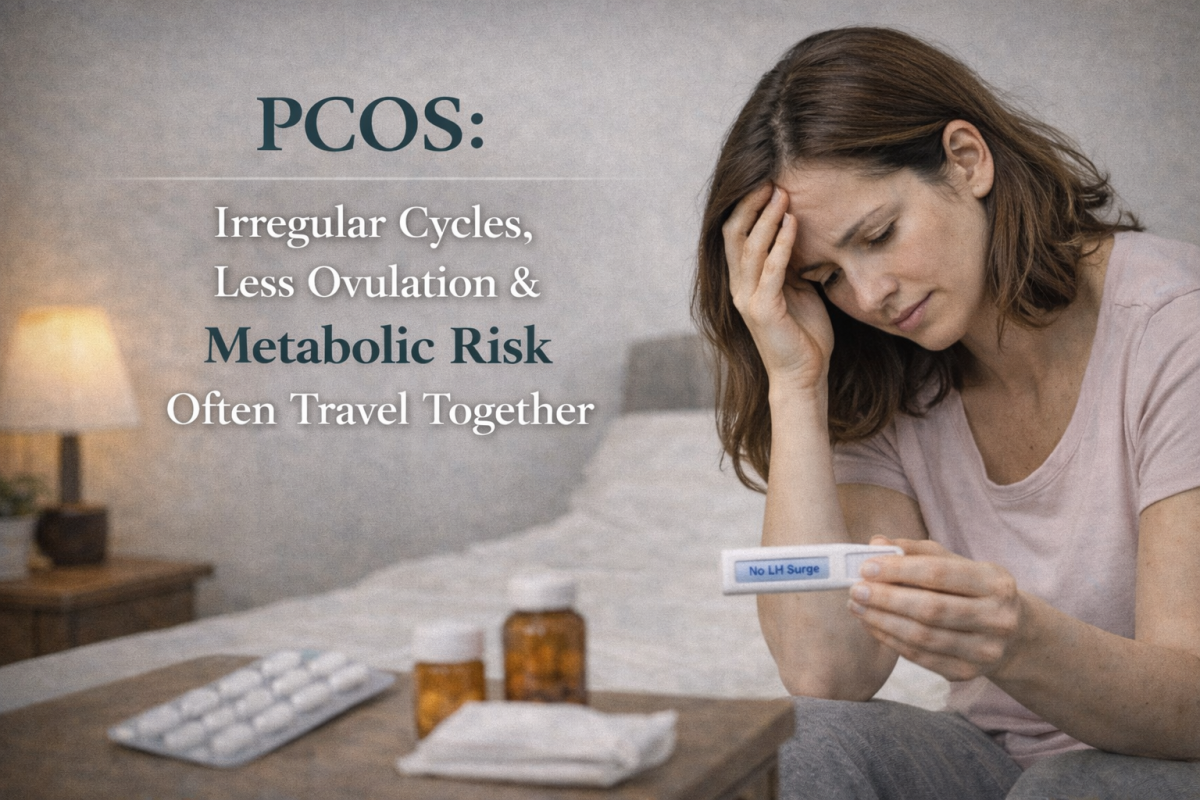
PCOS can involve irregular ovulation, androgen-related symptoms and metabolic risk. A plan depends on whether the current goal is cycle care, symptom management, metabolic health or pregnancy. Acupuncture and herbs should not be promised to cure PCOS or restore ovulation.
Many patients do not first experience PCOS as a diagnosis. Instead, they experience a body that is becoming harder to manage—cycles keep getting delayed, ovulation feels unclear, weight becomes harder to control, acne keeps coming back, or pregnancy does not happen even though they are trying seriously. This is exactly where PCOS treatment becomes important, not just to label the condition, but to support cycle-related symptom support, metabolic balance, and overall hormonal health.
That is one reason PCOS can feel frustrating. The problem is not only one symptom. It often pulls together menstrual irregularity, ovulatory dysfunction, androgen-related symptoms, and metabolic risk. The 2023 international guideline and ACOG patient information both describe PCOS as a condition that involves irregular cycles, signs of elevated androgens, and insulin-related metabolic issues—factors that all need to be addressed within a structured and realistic PCOS treatment plan.
PCOS is more than an ultrasound finding
One of the most common misunderstandings is reducing PCOS to “many follicles on the ovary.” In reality, ultrasound is only one part of the picture. Clinically, it is more important to ask whether ovulation is stable, whether androgen-related symptoms are present, and whether metabolic risk is part of the pattern.
What patients usually feel
Patients often do not describe PCOS in medical language. They describe it as:
- periods that keep getting delayed
- ovulation that never feels clear
- stubborn weight gain, especially around the abdomen
- recurring acne
- fatigue, especially after meals
- the feeling that the body is “not cooperating.”
That sense of physical loss of rhythm is often the real clinical story.
What modern medicine focuses on
Modern care for PCOS often centers on two major layers: ovulation and metabolism. The issue is not only whether a period occurs, but also whether ovulation is stable—and whether insulin resistance, weight gain, blood sugar, or lipid-related risk factors are becoming part of the picture. Lifestyle intervention is a major part of guideline-based care, especially for metabolic health.
How TCM may look at this pattern
In TCM gynecology, PCOS is often not reduced to one label. Some patients show a heavier, more sluggish, “damp” pattern. Some show stronger tension and disruption of rhythm. Some show a more depleted, irregular, slow-recovery picture. In practice, these patterns often overlap.
What matters most is not using abstract language, but translating the pattern into something useful: is the cycle heavy and sluggish, tense and irregular, depleted and delayed, or mixed?
Where acupuncture and herbs may fit
This is where it helps to stay realistic. In a TCM clinic, acupuncture and herbal medicine may fit best in:
- cycle support
- Sleep and stress support
- support for premenstrual symptoms
- helping the body feel steadier during attempts to regulate lifestyle rhythm
- Overall support during the trying-to-conceive phases, when the body feels dysregulated
This does not mean acupuncture or herbs replace medical evaluation. It means they may help some patients feel more stable, more regulated, and better able to work with the larger plan. Safety also matters: acupuncture is generally considered safe when performed properly by qualified practitioners using sterile needles, but it should still be used responsibly and with appropriate communication with a medical professional.
Who may benefit from a structured integrative review?
Patients may benefit from a more structured review if they have long, irregular cycles, unclear ovulation, worsening premenstrual symptoms, increasing weight difficulty, acne, or androgen-related changes, fatigue, or fertility timing that feels increasingly uncertain.
These patients often do not need another vague slogan. They need a clearer plan.
PCOS is not just about irregular periods, and it is not solved by a single sentence like “just lose weight.” Many patients need a plan that considers ovulation, metabolism, sleep, stress, cycle patterns, and fertility timing together.
If your body has started to feel less cooperative month after month, it may be time to stop guessing and start organizing the whole picture more clearly.
FAQ
Q: Is PCOS just “many follicles on ultrasound”?
No. Ultrasound is only one piece. The broader clinical picture often includes ovulatory dysfunction, androgen-related features, and metabolic risk.
Q: If I still get periods, does that mean I am definitely ovulating?
Not necessarily. Some patients with PCOS still bleed but do not ovulate consistently.
Q: Is weight loss the only real answer?
Weight management is important, especially when metabolic risk is present, but real-life care often also needs to address sleep, stress, cycle instability, and symptom burden.
Q: Can acupuncture cure PCOS?
A more accurate statement is that acupuncture and herbs may support cycle-related symptom support, sleep, stress, and symptom burden in some patients. They should not be presented as replacing evaluation or as a one-step cure.
Q: When is it not a good idea to just keep waiting?
If cycles remain very irregular, ovulation is unclear, symptoms are increasing, or fertility timing matters, it usually makes sense to organize the picture sooner rather than later.
If you are dealing with delayed cycles, unclear ovulation, worsening premenstrual symptoms, stubborn weight changes, fatigue, or a body rhythm that feels increasingly difficult to manage, an acupuncture consultation for menstrual or fertility-related concerns may help you better understand the pattern before you keep pushing forward month after month.
Bring the whole picture to the visit
Record cycle dates, prolonged gaps, bleeding, skin or hair changes and current medicines. Include relevant blood tests, ultrasound reports and whether pregnancy is a current goal. These details help the medical team distinguish PCOS from other causes and choose appropriate management.
Give any additional service a defined role
If you want to discuss acupuncture for pain, sleep or comfort, keep that goal separate from glucose control or ovulation treatment. Proposed herbal products require ingredient and interaction checks alongside the medical plan.
Practical questions before booking
Does having a period prove that I ovulated?
Not necessarily. Ask the medical clinician what monitoring is relevant to your situation rather than inferring ovulation from bleeding alone.